Trends & inspiration
Why the Seating Chart Is Dead: The Shift to Unstructured Receptions
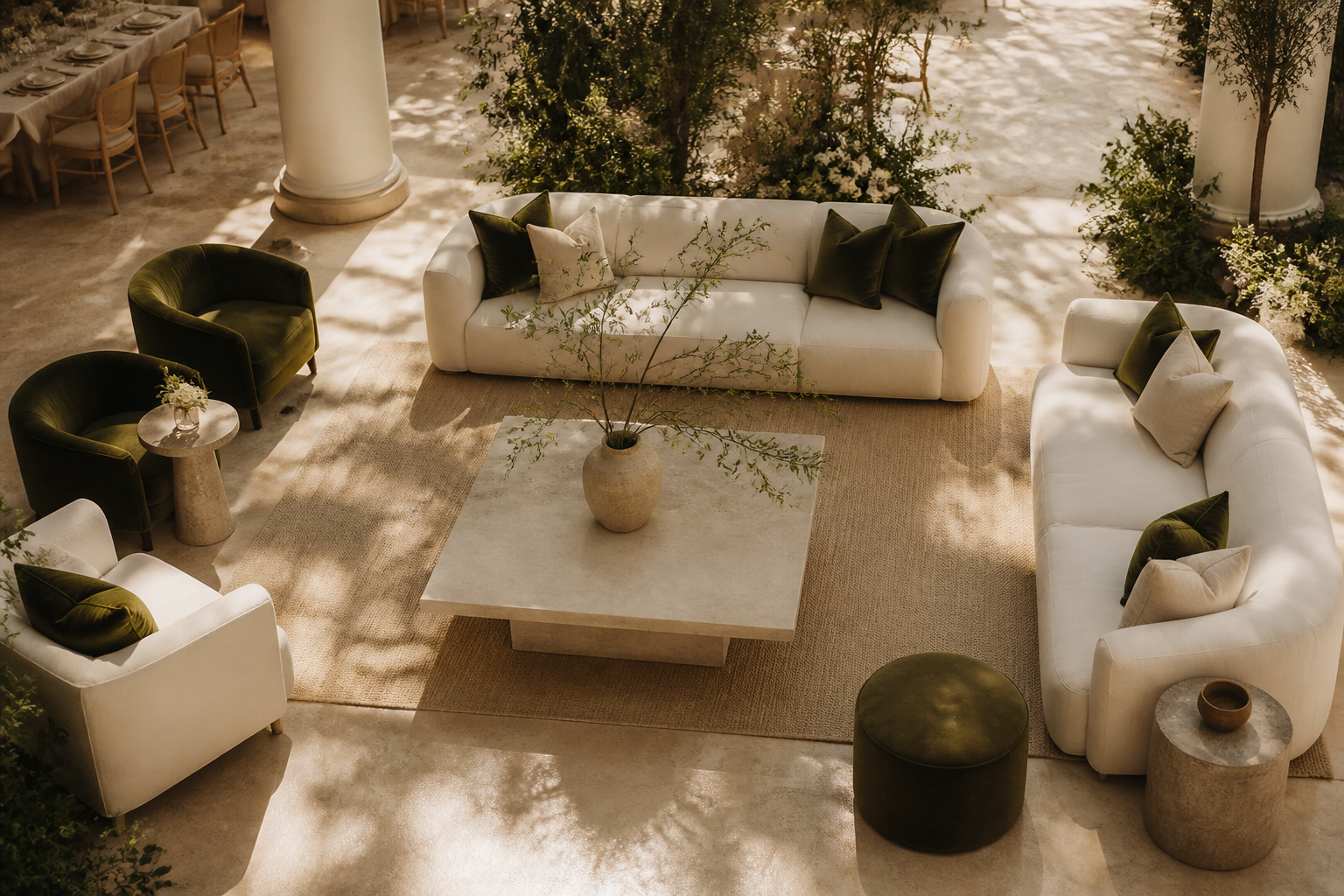
For decades, the seating chart has been the undisputed architect of the wedding reception. It determined where guests sat, whom they spoke to and, to a large extent, how the entire evening unfolded.
Now, that familiar structure is beginning to loosen.
The traditional three-course meal served at assigned tables is no longer the only way to host an elegant wedding reception. Many modern couples are choosing something more fluid, more sociable and considerably more relaxed: an unstructured, lounge-style celebration designed around movement rather than table numbers.
This is not simply another décor trend. It represents a change in how couples think about hospitality.
Rather than asking, “Where should everyone sit?”, couples are beginning to ask, “How do we want everyone to feel?”
The answer is increasingly less like a formal banquet and more like an unforgettable private party.
From Perfectly Placed to Genuinely Present
The rise of the so-called “anti-bride” does not mean that weddings are becoming careless or less beautiful. It reflects a growing resistance to traditions followed purely because they are expected.
Modern couples still want an extraordinary celebration. They simply want it to feel like their celebration—not a performance of somebody else’s idea of a perfect wedding.
That shift can be seen in relaxed dress codes, unconventional timelines, documentary-style photography and food that prioritises enjoyment over formality. It is also transforming reception layouts.
Instead of directing every guest to a predetermined chair, lounge-style receptions allow people to choose where they settle, when they eat and how they move through the evening. The atmosphere feels less staged and more lived in.
Ironically, creating something this effortless often requires a great deal of intention.
The Evolution of Wedding Lounge Décor
Wedding lounges were once small “chill-out areas” positioned near the bar or outside the main reception space. They offered guests somewhere to escape the music for a few minutes before returning to their assigned tables.
Today, the lounge is no longer peripheral. In many contemporary receptions, it has become part of the main event.
The latest wedding lounge décor trends extend far beyond a few scattered sofas. Entire floor plans are being designed as a collection of curated social spaces, each with its own atmosphere and purpose.
Think low-slung linen sofas, vintage armchairs, layered Persian rugs, sculptural coffee tables, soft lighting and clusters of architectural greenery. Cocktail tables and bar stools create natural stopping points, while smaller seating arrangements encourage intimate conversation.
Rather than filling one room with identical tables, couples can create a collection of interconnected spaces. Guests might begin the evening beside an outdoor cocktail bar, move towards a grazing station, settle into a candlelit lounge and later find themselves drawn naturally towards the dance floor.
The result feels more like a beautifully designed home, boutique hotel or private members’ club than a conventional function venue.
Why the Traditional Seating Chart Feels Outdated
For many couples, preparing the seating chart is one of the most stressful parts of wedding planning.
It requires them to navigate family dynamics, friendship groups, former relationships, plus-ones and last-minute RSVP changes—all while trying to ensure that nobody feels overlooked or uncomfortable.
After hours of planning, the hoped-for “perfect” arrangement rarely survives the reception itself. Guests change places, pull chairs between tables and move around the room to speak to the people they actually want to see.
Rigid seating can also affect the momentum of the evening. A long formal meal divides the reception into clearly controlled stages: sit, eat, listen to speeches and wait for permission to move again.
That format can be beautiful when it suits the couple and their guests. But it is no longer the automatic definition of an elegant wedding.
Removing assigned seats softens the social rules. Guests can catch up with old friends, meet new people, move between groups and take breaks when they choose. Conversation becomes more spontaneous, and the transition from drinks to dinner and dancing feels less like a schedule being enforced.
The wedding becomes something guests participate in rather than something they simply watch.
Designing for Movement and Flow
An unstructured reception should never feel unplanned.
In fact, removing the conventional table layout places even greater importance on spatial design. Every zone needs a purpose, and guests should be able to understand the room instinctively.
A successful lounge-style layout generally includes several different types of space:
Anchor points: Larger modular seating arrangements create recognisable gathering places for groups. Quick perches: Cocktail tables, counters and bar stools provide convenient places to pause with a drink or small plate. Intimate corners: Armchairs, small sofas and side tables offer quieter spaces for conversation. Accessible seating: Comfortable, supportive chairs should be reserved or positioned conveniently for elderly guests, pregnant guests and anyone with limited mobility. Dining-height surfaces: Not every dish can be eaten comfortably from a sofa or while standing. Include enough proper tables for guests who need or prefer them. A defined dance floor: The floor should remain visually and physically connected to the other zones so that dancing feels like a natural part of the celebration.
Lighting is equally important. Candles, lamps, pendants and subtle uplighting can define each area without constructing physical barriers. The goal is to create distinct moods while maintaining one cohesive experience.
Food Without the Formal Dinner Bell
The success of an unstructured reception depends heavily on the catering format.
A traditional plated meal requires guests to be seated at roughly the same time. Lounge-style receptions work better with food that can move with the celebration.
Roaming small plates, chef-led stations, generous harvest tables, beautifully presented bowl food and elevated street-food concepts allow guests to eat throughout the evening. A late-night snack can then become another memorable moment rather than an afterthought.
However, “informal” should never mean insufficient.
Guests must understand when food is available, where to find it and whether more courses are still coming. Portions should be substantial enough to replace a complete meal, and dietary requirements must be considered across every food station—not only at one separate table.
No seating chart does not mean no hospitality. The food service should feel abundant, deliberate and easy to navigate.
Why South African Weddings Are Perfect for It
South African venues are particularly well suited to lounge-style receptions.
From Cape Winelands estates and Lowveld lodges to coastal venues and contemporary Johannesburg spaces, our weddings frequently move between indoor and outdoor environments. Terraces, courtyards, lawns, verandas and open-sided reception spaces naturally support a more fluid format.
A sunset reception could begin outside with drinks and canapés before guests drift towards a covered lounge, interactive food stations and an open dance floor. Rather than treating the landscape as a backdrop, the layout allows it to become part of the experience.
The format also offers an opportunity to celebrate South African design. Locally crafted timber furniture, woven textures, indigenous greenery, artisanal ceramics and regional food can make the reception feel modern without losing its sense of place.
Of course, our climate also demands practical planning. Outdoor lounges require shade during the day, warmth after sunset and a complete weather contingency. Beautiful furniture that cannot survive a Highveld thunderstorm or Cape wind is not a plan—it is a Pinterest board.
The Psychology of an Unstructured Reception
The moment guests realise that they have not been assigned a table, the atmosphere changes.
The absence of a seating chart signals that the rules of the evening have softened. Guests are given permission to explore, interact and experience the reception at their own pace.
For confident, sociable groups, this can create a remarkable sense of energy. People move more, talk more and often reach the dance floor sooner. Instead of spending most of the evening with the seven people assigned to their table, they encounter a much broader cross-section of the guest list.
But freedom should not become uncertainty.
Guests still need subtle guidance. Clear signage, a well-communicated timeline and strategically positioned hosts or coordinators can make the experience feel effortless. If nobody knows whether they should eat, sit or wait for a speech, the relaxed atmosphere quickly becomes confusion.
The best unstructured weddings are not without direction. Their direction is simply less visible.
Is a Lounge-Style Reception Right for Every Wedding?
No—and that is precisely the point.
The future of weddings is not about replacing one compulsory format with another. It is about choosing a reception style that genuinely suits the couple, the venue and the people attending.
A completely unstructured layout may not be ideal when:
Most guests are elderly or require supportive seating. The reception includes a formal plated meal. The programme contains several speeches or ceremonial moments. The venue cannot accommodate multiple seating and dining zones. The guest list consists of groups unlikely to mingle comfortably. Weather conditions could force everyone into a much smaller indoor space.
A hybrid format can offer the best of both worlds. Couples might assign tables but not individual seats, reserve dining tables for family members who need them, or host a short seated meal before opening the room into lounges, bars and dancing.
The seating chart is not dead because nobody should ever use one again. It is “dead” because it is no longer the unquestioned default.
A More Intentional Kind of Celebration
The rise of unstructured receptions reflects something larger than changing furniture styles. Couples are moving away from weddings designed to look perfect from a distance and towards celebrations that feel extraordinary from within them.
The new luxury is not necessarily a place card written in gold calligraphy. It is freedom without confusion, beauty without stiffness and hospitality that feels personal rather than prescribed.
When lounge-style receptions are designed thoughtfully, guests do not notice the absence of a traditional floor plan. They simply notice that they are comfortable, connected and having an exceptional time.
And perhaps that is the most compelling wedding trend of all: fewer rules, better experiences and celebrations that finally feel as natural as the relationships they honour.
Your Wedding, Your Way
Whether your celebration calls for assigned tables, an unstructured lounge or a carefully considered combination of both, your guests need clear information before they arrive.
A bespoke wedding website can bring your schedule, venue information, dress code, menu details, accommodation and guest updates together in one beautifully designed digital space.
At The Wedding Web Co., we help South African couples simplify the administration behind the celebration—so they can spend less time managing questions and more time creating a wedding that feels entirely their own.
Less wedding admin. More wedding magic.
Frequently asked questions
Ready to Make Your Wedding Admin Easier?
Start with a free sample concept built around your wedding — no obligation, no pressure.